
Floors Designed for Chemical Spills and Heavy Tools
Epoxy Floor Coatings in Brooksville for garages, workshops, and commercial spaces needing stain resistance and easy cleanup
Bare concrete in garages and workshops absorbs oil, transmission fluid, battery acid, and other chemicals that leave permanent stains and weaken the surface over time. Southern Pride Home Solutions installs epoxy floor coatings that form a non-porous barrier over concrete, preventing liquid penetration and creating a surface that tolerates dropped tools, rolling equipment, and continuous foot traffic without chipping or wearing through to the substrate. The service applies to residential garages where vehicles drip fluids, commercial warehouses where forklifts operate daily, and retail spaces where appearance and cleanliness directly affect customer perception. Coating systems include Solid Color for uniform appearance, Flake for decorative texture and slip resistance, Metallic for reflective depth, and Quartz for maximum durability in high-abuse environments.
Proper surface preparation involves diamond grinding the concrete to remove sealers, oils, and laitance—the weak surface layer that forms during concrete curing—and to create the textured profile necessary for mechanical adhesion. Without aggressive prep, epoxy debonds under tire torque or temperature fluctuations, peeling away in sheets rather than forming a permanent bond.
Schedule an on-site evaluation to discuss coating systems matched to your usage requirements and traffic patterns.
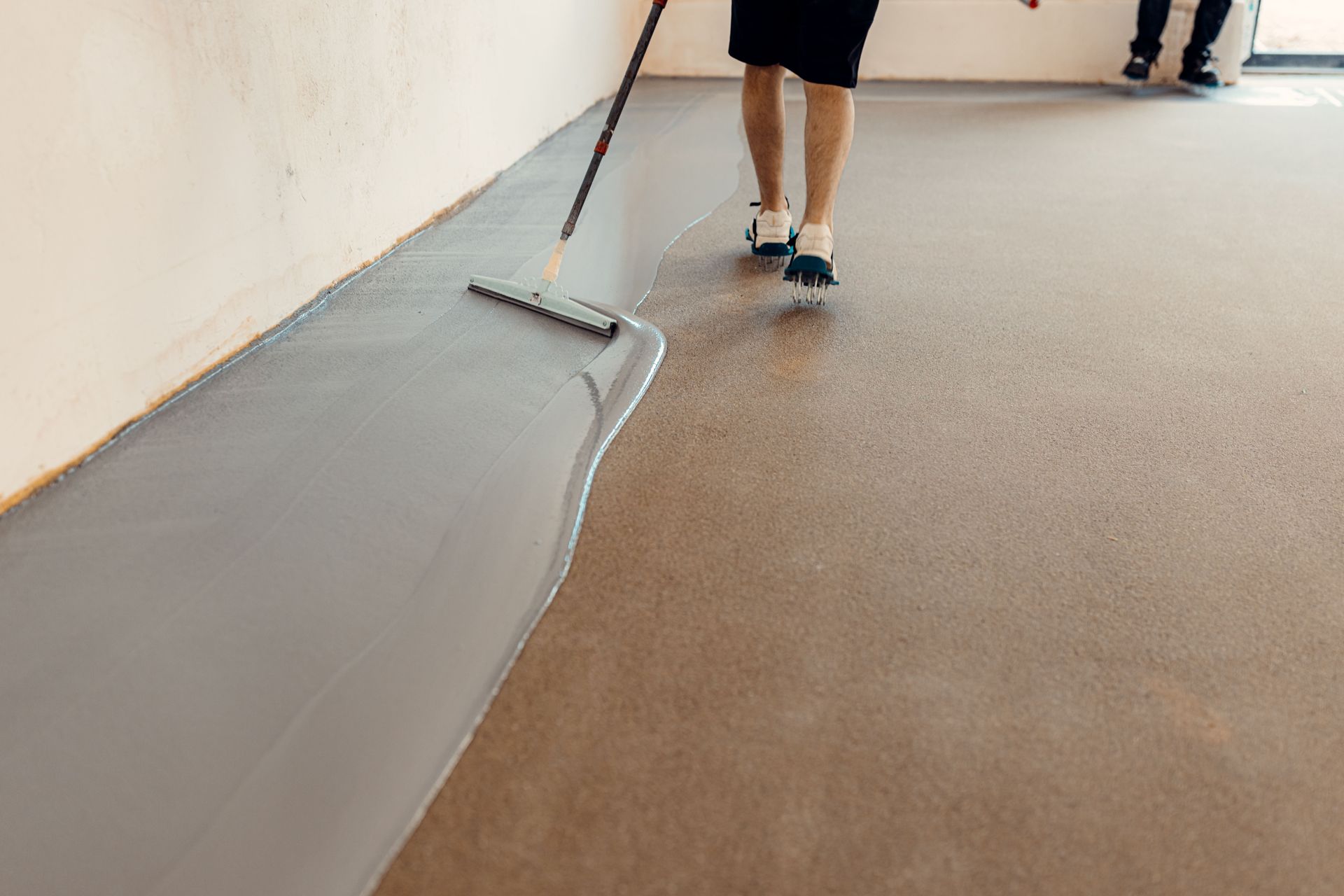
What Changes After Epoxy Coating Installation
Epoxy forms a thick, chemically resistant layer that spans small cracks and surface imperfections while providing a smooth, glossy finish that reflects overhead lighting and brightens the space. Flake systems incorporate colored vinyl chips broadcast into the wet epoxy base coat, adding texture that hides dirt and provides slip resistance without creating rough spots that trap debris. Metallic epoxy uses reflective pigments that shift appearance depending on viewing angle and lighting, creating a marbled or liquid metal effect suited to showrooms and high-end garages.
After installation, you notice a transformed floor that no longer absorbs spills—fluids sit on the surface and wipe away cleanly rather than soaking in and staining. The glossy finish makes sweeping and mopping faster because dirt does not lodge into pores the way it does on raw concrete. Properly installed epoxy resists hot tire pickup, where rubber softened by driving adheres to the floor, and tolerates repeated impacts from dropped hand tools without chipping or cracking. The coating lasts ten to fifteen years in residential settings and five to ten years in commercial environments before wear patterns or UV exposure require recoating.
Epoxy coatings require a clean, dry substrate and cannot be applied over existing paint, sealers, or moisture-compromised concrete. Floors with active water intrusion, severe cracking, or structural movement need those issues corrected before coating to prevent adhesion failure and premature wear.
What Homeowners Ask About Epoxy Flooring
Property owners evaluating epoxy systems typically want to understand installation time, performance differences between coating types, and maintenance requirements.
How long does epoxy flooring take to install?
Surface preparation and coating application usually require two to three days—day one for grinding and repairs, day two for base coat and flake or color layer, and day three for the topcoat, with each layer needing several hours to cure before the next is applied.
What is the difference between Solid Color and Flake epoxy?
Solid Color creates a uniform, high-gloss appearance similar to showroom floors, while Flake systems add texture and visual interest with colored chips that help hide dirt and provide better traction on sloped garage floors or areas exposed to moisture.
Why does surface preparation matter for epoxy adhesion?
Epoxy bonds mechanically to the texture created by grinding rather than relying on chemical adhesion alone, so floors in Brooksville that have been sealed, painted, or contaminated with oils must be ground back to clean, porous concrete for the coating to stay bonded under thermal stress and traffic loads.
When can vehicles drive on new epoxy coating?
Light foot traffic is safe after 24 hours, but vehicles should stay off the floor for at least 72 hours to allow full curing—driving on partially cured epoxy can cause hot tires to mark the surface or pull up sections of the coating before it reaches full hardness.
How is epoxy flooring maintained long-term?
Routine cleaning with a dust mop or soft broom removes grit that can dull the finish over time, and occasional mopping with mild detergent keeps the surface glossy—avoid abrasive scrubbing or harsh solvents that can wear through the topcoat and compromise chemical resistance.
Southern Pride Home Solutions provides customized flooring estimates after inspecting the concrete and discussing your intended use, traffic levels, and aesthetic preferences. Contact us at (352) 819-4680 to request a consultation and review coating options suited to your space.